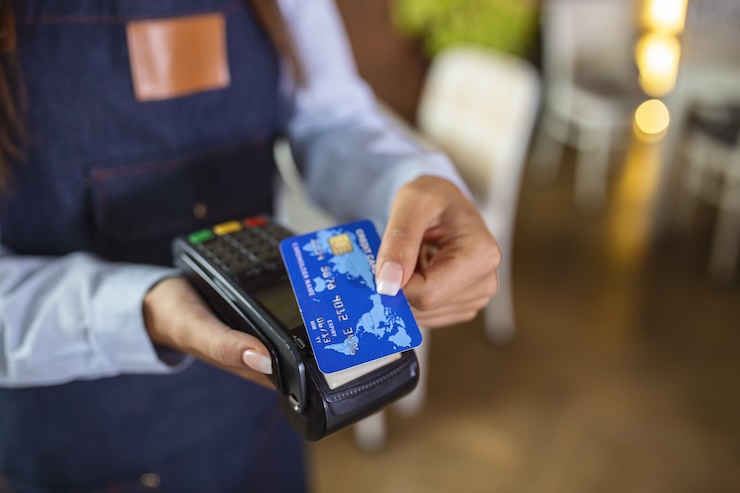
As a small business owner trying to keep costs down while you grow, you might wonder if there are any free ways to accept card payments.
The honest answer is that there are no genuinely fee-free card readers. Every provider needs to make money somewhere, whether that’s through set-up costs, pay-as-you-go transaction fees, monthly charges, or a combination.
Which is the most cost-effective? It depends. The key is understanding how different pricing models work in practice. A card reader with no monthly fee might look cheaper on the surface, but higher transaction charges can add up quickly. Equally, a paid plan that feels expensive at first can reduce your overall costs once you’re taking payments regularly.
Below, we unpack how you can get the best card reader deal for your business and look at some of the best value devices for small businesses in the UK, including:
Read more: Looking for more low cost ways to take card payments? Here are the cheapest card readers for small businesses.
What “fee-free” really mean for small business card readers
When card reader providers advertise low or no fees, they’re usually referring to set-up fees or monthly charges, not transaction costs. Even if a provider offers a free card reader or no subscription, you’ll still pay a percentage of every sale you process.
For small businesses with seasonal or unpredictable sales, avoiding monthly fees makes sense. Pay-as-you-go pricing keeps costs flexible, so you’re not paying for a card reader during quiet months. These setups also tend to come without long contracts, which can be reassuring if your business is still finding its feet.
On the other hand, if you’re processing card payments regularly, your transaction rate becomes much more important. At that point, a monthly fee can sometimes unlock lower rates and better support, reducing what you pay overall.
With that in mind, the best value card reader isn’t necessarily the one with the lowest headline price – it’s the one that fits how your business actually takes payments.
What are transaction fees actually paying for?
It’s easy to think of transaction fees as a penalty for taking card payments. In reality, you’re buying into a large, regulated payments ecosystem that your business benefits from directly – one that helps your business trade safely, build trust with customers, and grow.
Every time a customer taps or inserts their card, multiple checks and systems kick in behind the scenes – most of which exist to protect both you and your customer.
Transaction fees help fund this entire process, including fraud detection, data encryption, regulatory compliance and dispute handling. They also cover the infrastructure that allows payments to be authorised in seconds and settled into your account within a day or two.
Learn more in our ultimate guide to taking payments as a small business.
The best value card reader providers for UK small businesses
Here are six of the best value card reader providers for businesses in the UK.
Worldpay

Worldpay is one of the longest-standing payment processors in the UK. You can choose between different pricing structures depending on how much certainty you want over costs. Worldpay’s Simplicity plan bundles transaction fees into a single flat rate, while Custom pricing is aimed at businesses processing higher annual card turnover and offers variable rates.
Hire agreements typically run for 18 months, and next-day terminal replacement is included as standard.
| Cost and fees | Worldpay |
| Set-up fee | None |
| Card reader cost | Rental (no upfront cost) |
| Monthly fee | From £15 to £22.50 |
| Transaction fees | 1.50% (Simplicity) or custom |
| Contract length | 18 month minimum |
| Settlement speed | Next working day |
Tide

Tide stands out for offering multiple plans and options. You can start with pay-as-you-go pricing and no monthly fee, use Tap to Pay on your phone, and then move to a monthly plan with lower transaction fees once your card volume justifies it. This flexibility means you’re not locked into a pricing model that no longer fits as your business grows.
Tide’s card readers integrate closely with its business accounts, and settlements typically take three working days, though next-day payouts are available as a paid add-on (£2.99 per month).
| Cost and fees | Tide |
| Set-up fees | None |
| Card reader cost | From £159 (or £99 upfront on a pay-monthly plan) |
| Monthly fee | £0 to £17.99 |
| Transaction fees | From 0.89% + 3p (lower on paid plans) |
| Contract length | Varies by plan |
| Settlement speed | 1–3 working days (next-day available for £2.99 per month) |
Square

With Square, you can use Tap to Pay on iPhone or Android with no hardware cost, or buy a compact Square Reader outright. There are no subscriptions by default, and transaction fees are flat, which makes costs easy to understand. Square also includes its POS software at no extra charge, along with basic reporting, fraud protection and dispute management.
For businesses that exceed £200k in annual card sales, Square offers custom rates, which gives you some room to scale without changing provider.
| Cost and fees | Square |
| Set-up fees | None |
| Card reader cost | From £19 (or £0 with Tap to Pay) |
| Monthly fee | None |
| Transaction fees | From 1.75% (in-person UK cards) |
| Contract length | None |
| Settlement speed | Next working day (instant payouts available for a fee) |
takepayments

takepayments has a different approach to most card reader providers – it offers fully personalised pricing rather than publishing fixed fees.
Instead of choosing from preset plans, takepayments builds you a bespoke package based on your expected card turnover, preferred hardware and support needs. This can make takepayments good value for small businesses that are already processing card payments regularly and want to avoid paying higher flat rates unnecessarily.
Contracts are typically 12 months, and next-day settlement is standard. While the lack of upfront pricing makes it harder to compare at a glance, it does allow for more competitive rates once your volumes increase.
| Cost and fees | takepayments |
| Set-up fee | None |
| Card reader cost | Included in tailored quote |
| Monthly fee | Included in tailored quote |
| Transaction fees | Custom pricing |
| Contract length | 12 months (standard) |
| Settlement speed | Next working day |
SumUp

SumUp allows you to start taking card payments quickly without committing to a contract or a monthly fee. You can accept payments using Tap to Pay on iPhone or Android, or buy a SumUp card reader outright. There’s no subscription by default, and transaction fees are flat, which makes costs easy to understand when you’re starting out. For businesses processing more than £3,000 per month, SumUp offers a paid plan that reduces transaction fees to 0.99% (compared to the standard 1.69%).
Settlements are typically next day, including weekends and bank holidays, and the SumUp app includes basic reporting and sales insights at no extra cost.
| Cost and fees | SumUp |
| Set-up fee | None |
| Card reader cost | From £30 (or £0 with Tap to Pay) |
| Monthly fee | None (or £19 with Payments Plus) |
| Transaction fees | 1.69% or 0.99% with Payments Plus |
| Contract length | None |
| Settlement speed | As early as next day |
PayPal

With PayPal, you buy the card reader upfront and then pay a flat transaction fee on each sale. There are no ongoing subscription costs, which makes PayPal a good choice if you already use the platform for online payments or want to keep costs flexible. The reader supports chip-and-PIN, contactless, PayPal payments and QR codes, all managed through the PayPal app.
While PayPal’s pricing isn’t the cheapest once volumes increase, its strength lies in its ease of setup and predictable fees.
| Cost and fees | PayPal |
| Set-up fee | None |
| Card reader cost | From £29 + VAT |
| Monthly fee | None |
| Transaction fees | 1.75% (card, PayPal & QR) 2.5% (payment links & invoicing) |
| Contract length | None |
| Settlement speed | Typically next working day |
In conclusion
As card payments become a bigger part of your turnover, transaction fees tend to matter more than subscriptions. At that point, care reader providers offering tailored pricing or bundled plans can be better value, even if they come with a contract or fixed monthly charge.
The right choice comes down to how often you take card payments, how predictable your sales are, and whether you value flexibility or cost certainty. By understanding how fees are structured, you can choose a card reader that supports your business both now and can grow alongside you.